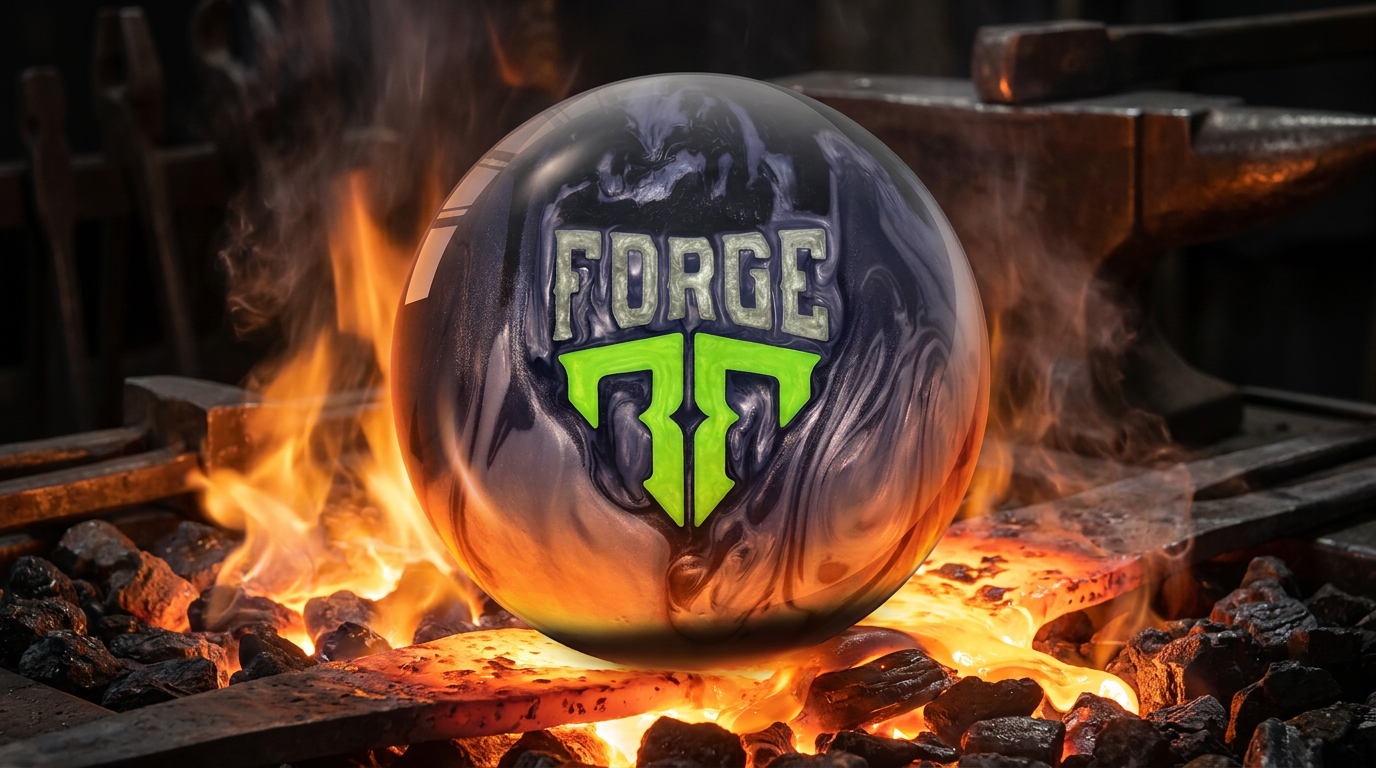
The Steel Forge: Late-Read Pearl That Demands Precision—And Rewards It
You're sitting on fresh oil, the pattern is tight, and your usual go-to pearls are reading too early. You need a ball that will lay down through the heads and snap hard when it finds friction—but one that won't punish you if your release isn't textbook.
Performance
The Steel Forge combines the Propulsion MXV Pearl cover from the Evoke Hysteria with a Detonator symmetrical core to deliver a late-reading, angular reaction with serious downlane continuation. Reviewers consistently praise its ability to push far down the lane before making a sharp, aggressive backend turn—cleaner through the heads than weaker pearls, but snappier than typical MOTIV balls. However, there's real disagreement on forgiveness: some call it predictable and playable with room for error, while others describe it as highly responsive to friction and demanding of precise execution, prone to hooking excessively off the edges or checking out early on missed shots. Most agree it outperforms the Nuclear Forge and compares favorably to the Evoke Hysteria, though it reads the lane slightly differently depending on your release and rev rate.
Pros
- Strong continuous midlane drive that extends well past typical MOTIV reaction points
- Angular, sharp backend snap that generates multiple 4-pins and good pin action
- Clean front-end read thanks to the low-RG symmetrical core, allowing control on oil
- Responds well to surface adjustments (2000 pad work softens aggression if needed)
- Excellent energy retention through the pins with reliable carry
Cons
- Highly responsive to friction—too much off the dry boards, not enough in heavy oil on some layouts
- Limited margin for error; edge misses and release inconsistencies show up quickly
- May read the lane too early and violently on typical house shots with moderate oil
- Requires careful breakpoint placement to avoid flat corners and weak corner hits
Who Should Buy This
- Bowlers throwing harder with straighter releases who need an angular pearl on fresh or tight oil
- MOTIV loyalists looking for a quicker, more aggressive reaction than their typical lineup
- Tournament players who want late-read control without switching to a solid coverstock
- Anyone wanting a versatile midlane-control ball that pairs well with the Evoke Hysteria
Who Should Skip This
- One-handed bowlers or those with high rev rates who may find it over-reactive to friction
- Bowlers who need high forgiveness on off-center shots—this ball punishes edge misses
- Players on house shots with moderate carry-down who prefer smoother, earlier-reading pearls
Buying Tips
Ask your pro shop to verify the factory finish is 5000 grit LSS; some testers found actual finish closer to 4700 grit. If you're getting excessive backend snap, hitting it with a 2000 pad will slow it off friction while keeping backend motion intact. Pair it with the Evoke Hysteria as a 1-2 combo for fresh-to-transitioning conditions.
Verdict
The Steel Forge is a legitimate choice for bowlers who know their release and can handle a late-reading, friction-sensitive pearl. It delivers exactly what MOTIV promised—an explosive downlane reaction with real teeth—but it's not a ball for casual players or high-revision throwers who need forgiving motion. If you thrive on precision and want to stay competitive on fresh oil, it belongs in your bag.
Specs
| Weight | RG | Differential | Mass Bias |
|---|---|---|---|
| 16 lb | 2.47 | 0.054 | -- |
| 15 lb | 2.47 | 0.055 | -- |
| 14 lb | 2.49 | 0.054 | -- |
| 13 lb | 2.55 | 0.045 | -- |
| 12 lb | 2.62 | 0.032 | -- |
FAQ
How does the Steel Forge compare to the Evoke Hysteria?
Both use the same Propulsion MXV Pearl cover, but the Steel Forge has a Detonator symmetrical core (lower RG, cleaner front end) while the Hysteria uses a different core. The Steel Forge reads slightly later down the lane and has a more controlled, climbing motion rather than the Hysteria's sharper snap, making it better for fresh oil. Some reviewers recommend them as a strong 1-2 combo pairing.
Is the Steel Forge more or less angular than the Nuclear Forge?
The Steel Forge is noticeably snappier and more angular than the previous Nuclear Forge, with quicker change of direction and stronger continuation. Reviewers describe it as one of MOTIV's most angular balls to date, generating medium-sharp to hard backend hook depending on oil conditions.
Will this ball work for a house shot, or is it only for sport patterns?
It can work on house shots, but it's demanding. Multiple reviewers found it reads the lane too early and violently on typical house conditions, requiring careful breakpoint placement and precise release. It shines more on tighter patterns or fresh oil. Light surface work (2000 pad) can help make it more controllable on house shots.
How does it handle oil compared to the Nebula?
The Nebula gets down the lane longer and reads later than the Steel Forge. The Steel Forge's core picks up earlier and makes an arcy turn sooner, meaning it's better for bowlers who need earlier roll and recovery. The Nebula is the better choice if you need maximum length through the heads.
Does surface finish affect how much it hooks?
Yes. The factory 5000 grit LSS finish can be aggressive; reviewers found that hitting it with a 2000 pad will slow its reaction off friction while maintaining backend motion, making it more predictable on house shots without sacrificing its strong continuation.
What layout should I ask for when drilling?
Reviewers tested it successfully on 45x4.5x45, 60x5x40, and 60x4.5x30 layouts. The layout matters for RG positioning, but the core itself is relatively forgiving. Work with your pro shop on placement based on your release—faster, straighter throwers can use layouts that emphasize the core's downlane push.