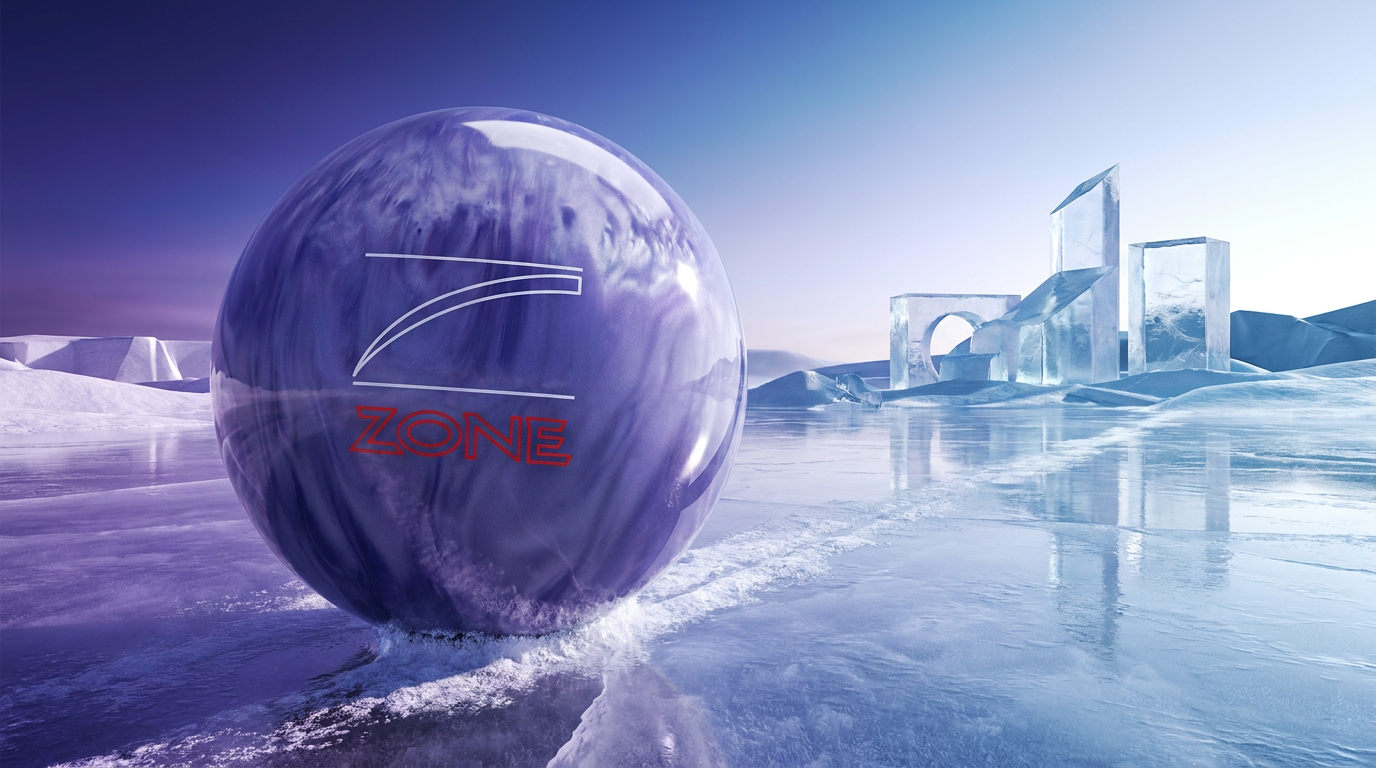
The Pearl That Reads Cleaner: Danger Zone Purple Ice for Bowlers Who Want Length Without Overthinking
You're standing in the approach on game three, the lane is opening up, and you need a ball that gets through the front without making you adjust the surface. You grab something flashy—but will it actually work, or are you chasing novelty? The Danger Zone Purple Ice walks a line between nostalgia and modern pearl behavior that most symmetrical options miss.
Performance
The Purple Ice lives up to its pearl designation: it noticeably clears the front of the lane and delays the read compared to the solid black Danger Zone, giving you more length. After 100+ games, reviewers consistently report a smooth, predictable, continuous roll that doesn't require out-of-the-box surface adjustments. However, opinions split on raw strength. One camp calls it weak and slow—almost entry-level—best suited for high rev bowlers or dry conditions where its gentleness prevents over-hooking. Another camp praises that same smoothness as controllable and versatile across different lane areas. The shiny factory polish (500 compound/polish) contributes to that cleaner skid; resurface it and the HK22 coverstock shows more friction response. Both camps agree it's reliable and pairs well as a complement to the solid version.
Pros
- Excellent length through the fronts—pearl coverstock delivers as advertised
- Smooth, predictable, continuous roll; doesn't require surface tweaks out of the box
- Budget-friendly relative to other performance pearls
- Versatile enough to work across different lane areas when thrown correctly
- Reliable complement to the black solid Danger Zone for a one-two punch
Cons
- Weak and slow reaction—not for bowlers wanting angular, aggressive motion
- Shiny factory polish may skid too much on oil-heavy patterns without resurfacing
- Limited backend pop compared to stronger pearl options (e.g., Storm Phase 2 Pearl)
- Better suited to specific rev rates and oil volumes; less universal than some competitors
Who Should Buy This
- High rev bowlers who need a controllable piece that won't jump off the pattern
- League bowlers building a two-ball arsenal (black solid + purple pearl)
- Bowlers who prefer rounder, more continuous hook shapes over aggressive backends
- Bowlers on lighter oil patterns or dry lanes who want a ball that won't over-react
Who Should Skip This
- Low rev bowlers on heavy oil house shots (too weak and slow for that application)
- Bowlers seeking a strong, angular breakpoint—this is smooth, not snappy
- Those who dislike shiny factory finishes without immediate resurfacing
Buying Tips
Buy it with the intent to keep it mostly polished if you're on drier lanes, or plan to surface it to 4500 grit to unlock more friction response on medium conditions. Drilling custom grips will help you dial in release consistency, especially if you're testing whether drift is a throw issue or a ball issue. Don't expect this ball to save a poor delivery; it rewards controlled, repeatable shots.
Verdict
The Danger Zone Purple Ice is an honest, affordable pearl that does exactly what a pearl should: get down the lane clean and delay the read. It's not the strongest option in the symmetrical pearl space, but that weakness is its selling point for the right bowler—one who throws heat and needs friction control, or one building a matching pair without breaking the bank. If you're on heavy oil and looking for angular motion, look elsewhere; if you're a high rev bowler or dry-lane player who values smooth predictability, this is worth the investment.
Specs
| Weight | RG | Differential | Mass Bias |
|---|---|---|---|
| 16 lb | 2.488 | 0.048 | -- |
| 15 lb | 2.501 | 0.048 | -- |
| 14 lb | 2.518 | 0.048 | -- |
| 13 lb | 2.574 | 0.04 | -- |
| 12 lb | 2.597 | 0.04 | -- |
| 11 lb | 2.769 | 0.002 | -- |
| 10 lb | 2.8 | 0.002 | -- |
FAQ
How does the Purple Ice compare to the black solid Danger Zone?
The Pearl gives you significantly more length down the lane and a quicker, rounder backend response. The Solid is smoother and more continuous through the midlanes. They share the same legendary Danger Zone core, so think of them as a one-two punch: Solid for game one or two on fresh oil, Pearl for game three or when you need the ball to skip further before reading.
I'm a low rev bowler on a house shot. Will this ball work for me?
Probably not as your primary piece. Reviewers described it as weak and slow, which means it reads so early and gently that low rev bowlers often couldn't get it to the friction area without moving significantly right. It's better suited to high rev dominant bowlers who need *less* backend motion, not more.
Do I need to resurface it out of the box?
No. The factory 500 compound polish works without adjustment on most conditions. However, one reviewer noted that resurfacing to 4500 grit helped it read the lane sooner and unlock more of the HK22 coverstock's potential—so it's an option if you find it too skiddy on your patterns.
How does it compare to other symmetrical pearls like the Storm Phase 2 Pearl?
The Phase 2 Pearl is noticeably stronger and reads earlier; the Purple Ice needs to be played further right to see similar friction response. The Purple Ice is weaker and smoother—think of it as the entry-level pearl, while Phase 2 is a mid-to-strong option.
Is this ball worth buying as a second ball, or should I get the solid instead?
If you already own a strong backend piece, the Purple Ice's clean skid and smoother roll make it a better complement. If you're starting from scratch, both work as game two balls, but the Solid is more versatile for wider range of oil volumes. Budget and your rev rate should drive the choice.
One reviewer threw it 90–100 games without resurfacing. Is it that durable?
Yes, the HK22 coverstock held up well in that test, and the bowler didn't need to adjust surface to maintain performance. That said, normal wear and lane oil buildup will eventually demand cleaning or resurfacing—this just wasn't an immediate issue out of the box.