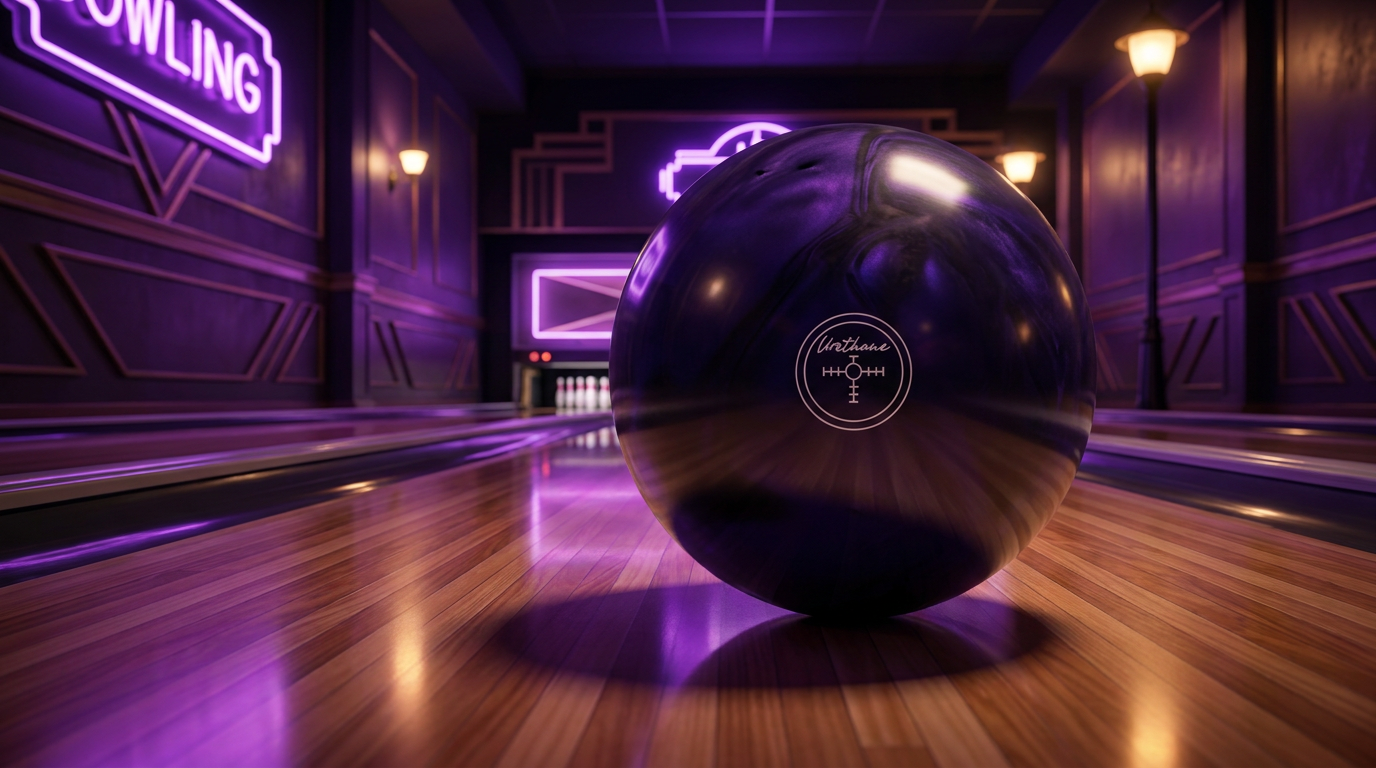
Hammer Purple Pearl Urethane: Old-School Control Meets Modern Carry on Light-to-Medium Oil
You've got a shot on a house shot with fresh oil, and your reactive resin is overreacting—hooking too early, too hard, leaving you scrambling for adjustments. What you need is a ball that reads the lane early but lets you steer it, something that gives you the length you want without the violent backend snap.
Performance
The Hammer Purple Pearl Urethane delivers a direct, smooth arc that reviewers consistently describe as predictable and controllable—a urethane with genuine length off the factory 500, 1000, 2000 Siaair finish, not a skid-and-snap reactive. Multiple reviewers praise its versatility across various oil patterns, with one noting 230+ averaging and 280+ games as a primary throw. Early ball reaction is typical for urethane—it reads friction quickly—but the pearl coverstock provides slightly more push and length than a solid urethane would. Reviewers agree this ball requires patience on first throw (urethanes need a break-in period to blend with lane oil) and that it's far more speed-sensitive than resin, rewarding controlled hand action over aggression. One notable point of comparison: it hooks notably earlier and more aggressively than the Black Hammer 78D, making it the stronger choice for bowlers who want setup happening sooner.
Pros
- Factory finish provides immediate length with smooth arc; no aggressive skid-and-hook snap
- Proven and repeated use by PBA tour players on varied patterns demonstrates durability and reliability
- Urethane coverstock gives ultimate control of the entire lane—no violent reaction at breakpoint
- Pearl composition adds push and length versus solid urethane, balancing early read with carrying power
- Excellent for keeping bowlers in play on drier or sport patterns where reactive balls overhook
Cons
- Requires dedicated break-in period every session; first shot hooks most, then gradually blends with oil
- Extremely speed-sensitive—careless hand action or inconsistent velocity creates unpredictable adjustments
- Dull out-of-box finish can feel hard to control initially; surface needs time to blend before full performance emerges
- Will not suit bowlers who prefer aggressive backend motion or heavy hook shapes
Who Should Buy This
- Bowlers stepping into urethane from resin who want a proven, less intimidating entry point
- Players with moderate to lower rev rates seeking smoother lane control without the early skid of reactive coverstock
- Anyone bowling light to medium oil patterns looking for a reliable, dry-lane complement
- Two-handed bowlers who prefer rev-dominant styles and want greater control than reactive balls offer
Who Should Skip This
- Bowlers who struggle with speed consistency (urethane is very speed-sensitive and requires disciplined release)
- Players seeking aggressive, heavy mid-lane motion or violent backend reaction
- High-speed throwers who already have command of early-read balls and don't need the added control
- Anyone unwilling to learn the break-in ritual and hand-action adjustments urethane demands
Buying Tips
Purchase this ball expecting a break-in curve; throw several warm-up shots before adjusting strategy, as the first throw off the bag will hook more than subsequent ones. The factory 500, 1000, 2000 finish is dull by design—reviewers found it smoothed and blended after initial use, so resist over-surfacing early. Speed consistency is critical: urethane is far more speed-sensitive than resin, so practice controlled approach and release before league play.
Verdict
The Hammer Purple Pearl Urethane is a masterclass in controlled urethane design—old-school coverstock technology delivering new-school carry and continuity. It's the right choice for anyone tired of reactive overreaction and ready to trade aggression for precision, provided you commit to learning its speed-sensitive, break-in-dependent nature.
Specs
| Weight | RG | Differential | Mass Bias |
|---|---|---|---|
| 16 lb | 2.61 | 0.03 | -- |
| 15 lb | 2.65 | 0.015 | -- |
| 14 lb | 2.68 | 0.013 | -- |
| 13 lb | 2.631 | 0.02 | -- |
| 12 lb | 2.628 | 0.026 | -- |
FAQ
How does the Hammer Purple Pearl Urethane compare to the Black Hammer 78D?
The Purple Pearl hooks earlier and more aggressively overall—reviewers document approximately 3 boards more total hook than the Black Hammer 78D. The 78D is softer (78 hardness vs. 74 for the Purple Pearl) and comes with a duller surface finish, making it a weaker step-down option. Choose the Purple Pearl if you want stronger, quicker backend reaction; choose the 78D if you need something more tame and predictable.
Do I need high rev rate to throw this ball effectively?
No. Reviewers specifically note this ball works well for bowlers with moderate to lower rev rates. One reviewer, bowling as a lefty, highlighted how well it controls backend reaction without requiring high rev input. However, the ball is extremely speed-sensitive, so consistent, controlled speed matters more than raw revolutions.
What should I expect on my first throw out of the bag?
Your first shot will hook immediately and more aggressively than subsequent throws. This is normal urethane behavior—the dull coverstock needs to blend with lane oil. Reviewers unanimously advise throwing several warm-up shots before making strategy adjustments based on early reaction.
Can I use this on sport shot or tougher oil patterns?
Yes, but it's designed for light to medium oil. One reviewer successfully used a different urethane on the 2016 Masters pattern (39 feet, medium-to-higher volume), but the Purple Pearl is optimized for drier, shorter patterns. It will overread friction on very oily patterns, potentially grounding too early.
How much does surface maintenance matter with this ball?
The factory 500, 1000, 2000 finish is dull and will feel hard to control at first. Reviewers emphasize letting it break in naturally and blend with lane oil rather than rushing to resurface. The surface smooths on its own with play, so avoid aggressive sanding early in ownership.
Is this a good ball for someone coming from reactive resin?
Yes. Reviewers describe it as a proven performer that rewarded bowlers tired of reactive overreaction. The smooth, predictable arc and lack of violent backend make it an excellent stepping stone into urethane—though expect to adjust to its speed sensitivity and early lane read compared to resin.