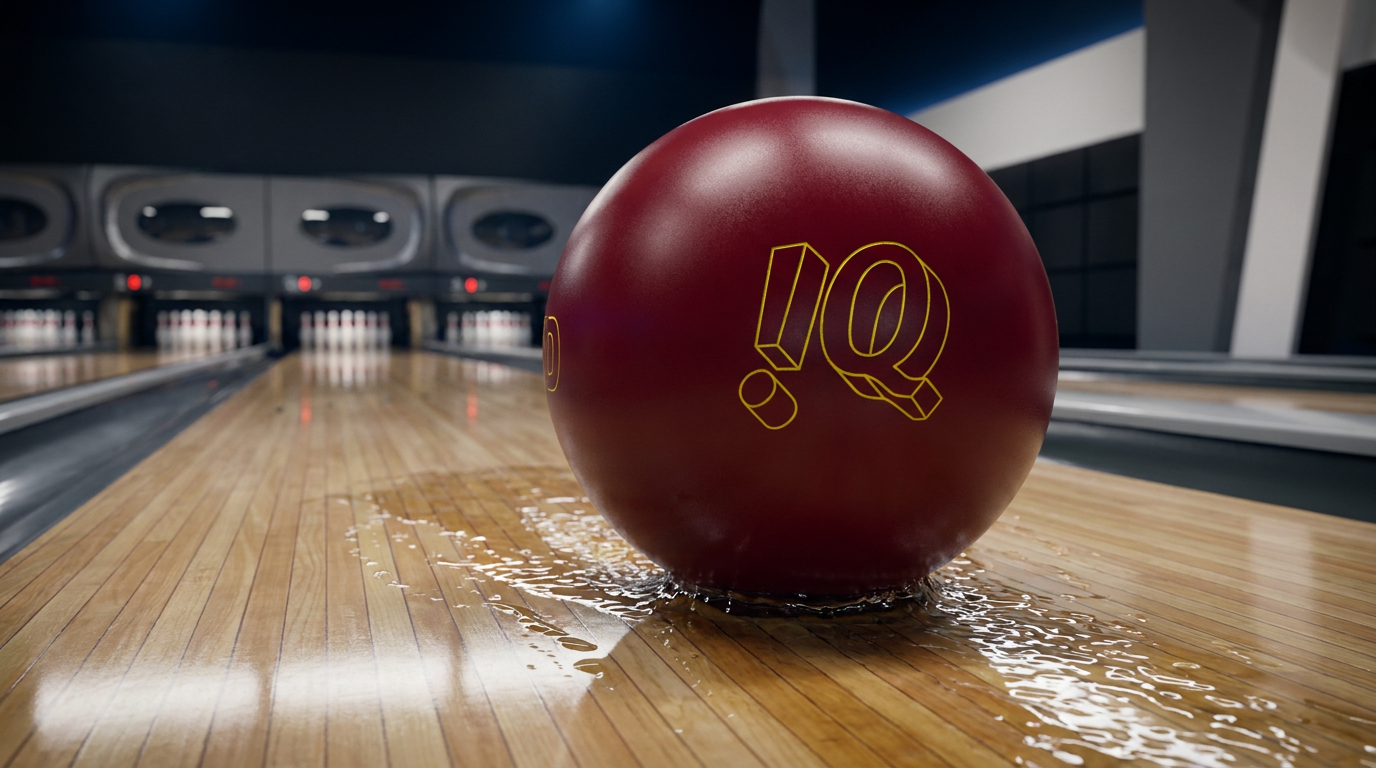
Storm !Q TOUR 78/U: The PBA-Legal Urethane That Reads Early and Stays Smooth
You've got fresh oil and a pattern that rewards control over aggression. Your old Pitch Black is now illegal on tour. You need a urethane that hooks early enough to carve through the heads but won't overreact and cost you the pocket—which is exactly the problem the Storm !Q TOUR 78/U was built to solve.
Performance
The !Q TOUR 78/U pairs Storm's hardened Controll 78 Urethane coverstock (adjusted from the Pitch Black formula to meet the new 78-hardness PBA requirement) with the low-RG, low-differential Centripetal C3 core, producing an early and smooth rolling motion with continuous traction. Reviewers agree the ball reads friction noticeably sooner than softer urethanes and flares more than the Pitch Black despite the increased hardness—a result of the stronger core compensating for the harder cover. On shorter, flatter patterns, multiple testers found it significantly earlier and smoother than traditional urethane, though on house shots with heavy friction, that early read can become unpredictable; surface preparation (testers used anywhere from 500 to 2000 grit) dramatically shifts when and how aggressively it hooks, and layout choice—pin-up versus pin-down—creates material differences in reaction at the professional level.
Pros
- Meets new PBA 78+ hardness requirement; only legal urethane choice for PBA National and Regional tour stops
- Early, smooth traction through the heads due to the hardened cover paired with a stronger core than traditional urethanes
- Significant flare from the C3 core prevents heavy oil-track carving and delivers more controlled down-lane reaction than softer urethanes
- Out-of-the-box 500-grit surface is standard and ready to bowl; works effectively on shorter, flatter patterns where urethane shines
Cons
- Limited real-world application for non-PBA bowlers; no advantage over Pitch Black for local league play unless you specifically need the harder durometer
- Requires precise surface prep and layout selection to dial in—pin-up vs. pin-down and grit adjustments create significant performance swings
- Early read can become too aggressive on house shots with heavy friction, potentially leading to misdirected hits
- Not forgiving of poor axis rotation or inconsistent speed; demands repeatable technique to stay in the pocket
Who Should Buy This
- PBA tour and regional players who must comply with the new 78+ hardness urethane rule
- Higher rev-rate bowlers seeking a controlled, predictable reaction on shorter or fresher patterns
- Bowlers who prefer early-reading urethane and don't like to curve their shots excessively
- Players stepping up from house shot bowling to tougher lane conditions who need smoother traction
Who Should Skip This
- Non-PBA league bowlers—your existing Pitch Black or 73-hardness urethane remains legal and may suit your game better
- Bowlers on typical house shots with heavy friction unless you're willing to experiment with surface adjustments
- Players who struggle with precision axis rotation; this ball requires clean execution and doesn't forgive excessive spin
Buying Tips
This ball comes out of the box at 500 grit, which works well on shorter patterns but will dig in hard and bail on fresh, high-volume oil. Plan to experiment with surface adjustments—testers found 2000 grit more suitable for medium-friction house conditions. Layout choice is critical: pin-up and pin-down configurations produced noticeably different reactions in testing, so consult with your pro-shop operator and consider Storm's official IQ 78 layout guidance video. Like all urethane, wipe the coverstock frequently during use; oil buildup kills hook.
Verdict
The Storm !Q TOUR 78/U is a legitimate, well-engineered solution to the new PBA hardness rule and delivers the early, smooth reaction it promises on the patterns where urethane belongs. However, unless you bowl PBA events, your money is better spent elsewhere—the Pitch Black remains superior for non-tour play, and this ball's narrow margin of advantage doesn't justify switching for recreational bowlers. For PBA competitors with higher rev rates and control-focused players tackling difficult short patterns, it's a worthwhile addition.
Specs
| Weight | RG | Differential | Mass Bias |
|---|---|---|---|
| 16 lb | 2.49 | 0.035 | -- |
| 15 lb | 2.49 | 0.029 | -- |
| 14 lb | 2.54 | 0.034 | -- |
| 13 lb | 2.59 | 0.045 | -- |
| 12 lb | 2.65 | 0.035 | -- |
FAQ
How does the !Q TOUR 78/U differ from the Pitch Black if they share the same coverstock formula?
Storm adjusted the Controll coverstock formula up to 78 hardness to comply with PBA rules, which naturally makes it harder and slightly less reactive. To compensate, they paired it with a stronger Centripetal C3 core (as opposed to weaker traditional urethane cores), which allows the ball to flare more and read the lane earlier. The net result is an earlier, smoother hook with more controlled continuation—but not radically different; reviewers noted it's a nuanced upgrade rather than a dramatic shift.
Why do reviewers keep talking about pin-up versus pin-down layouts for this ball?
The C3 core's low RG and low differential are significantly stronger than traditional urethane cores, which changes how the ball should be drilled. Storm's R&D team released guidance on this because the stronger core means typical urethane drilling approaches don't work the same way. Testers found that subtle layout adjustments (pin-up vs. pin-down) created material performance shifts at the professional level, affecting when the ball enters its breakpoint and how much it flares.
Does surface grit matter a lot with this ball?
Yes, dramatically. The ball ships at 500 grit, which works well on shorter, flatter patterns but can cause it to dig in and bail on fresh, high-oil house conditions. Testers used surfaces ranging from 500 to 2000 grit and found that higher grit pushed the hook spot further down the lane. If you're bowling on a house shot, plan to move the surface up from 500 grit to dial in the right reaction.
If I don't bowl PBA events, should I buy this instead of a Pitch Black?
No. The Pitch Black remains legal for all non-PBA USBC events and local league play. Reviewers consistently stated that unless you're competing on PBA tour or regionals, the hardness rule doesn't apply to you, and the Pitch Black is likely a better match for house shot conditions. The !Q TOUR 78/U was engineered specifically to solve the PBA hardness problem, not to replace the Pitch Black for recreational bowling.
How does this compare to older school urethane balls like the Roto Grip Grenade?
The !Q TOUR 78/U is a blend of old-school hardness (78 durometer, similar to pre-2010s urethanes) with modern core technology (the low-RG C3). That combination makes it earlier-reading and smoother than both traditional soft urethanes and the Pitch Black, but it still requires precise technique. Older urethane balls had weaker cores and dug in harder; this one flares more, which produces a more controlled shape down the lane.
Will this ball work on house shots?
It can, but it's not the ideal choice. Reviewers threw it on house shots and found it hooks aggressively early due to the high surface friction, making it harder to control angles and targeting. It's purpose-built for shorter, flatter, fresher patterns—the conditions where urethane is typically used on tour. If you want to use it on a house shot, you'll need to experiment with surface adjustments and accept that it won't be as versatile as a reactive resin ball.