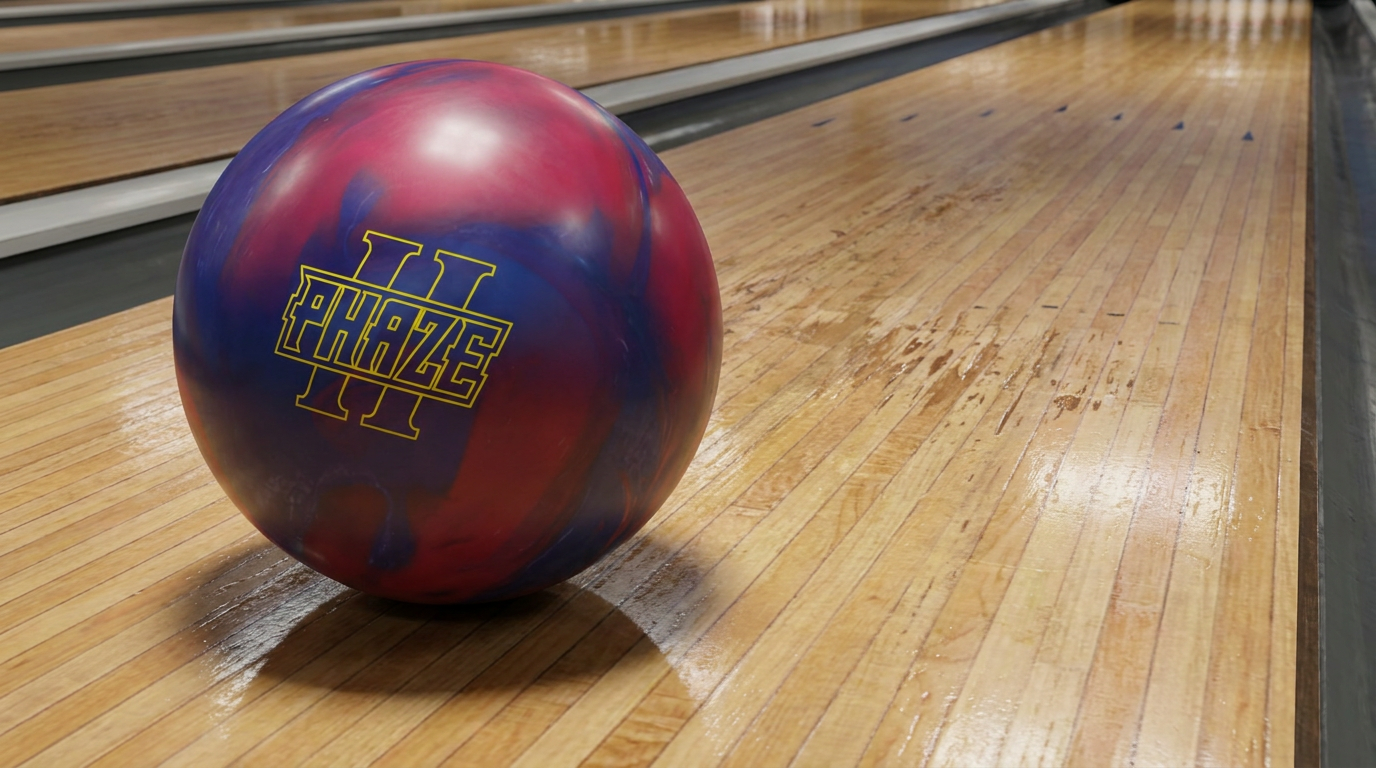
Storm PHAZE II: The Benchmark That Refused to Age
You've been bowling competitively for years, and you've watched stronger balls come and go—each one promising to be the next standard. But nine years after its 2016 release, the Storm PHAZE II still shows up in winning bags and league lineups. What makes a ball stay relevant that long?
Performance
The PHAZE II delivers smooth, predictable motion downlane with unexpectedly strong backend power—a combination that appeals to bowlers across all rev rates and throwing styles. Reviewers consistently praise its versatility: one player called it the most versatile ball he'd ever thrown (more so than the Venom Shock), while another noted it works equally well for higher-rev players, lower-speed players, and everyone in between. The TX-16 Solid coverstock at 3000 grit factory finish is the key to its longevity; it reads the lane early enough to feel controllable but maintains enough energy to finish through the pins. However, reviewers note that as a solid coverstock, it requires more effort to get downlane from extreme angles compared to pearl or hybrid alternatives, and on heavily oiled fresh conditions it can play smoother and less poppy than some expect until the cover breaks in.
Pros
- Versatility that genuinely transcends rev rate, hand style, and drilling layout—reviewers confirmed it works one-handed, two-handed, no-thumb, and drilled unconventionally
- Smooth, controllable motion downlane with strong, predictable backend finish that doesn't feel aggressive
- Highly responsive to surface adjustments; you can fine-tune read by changing grit without replacing the ball
- Nine-year track record of consistent performance and popularity, suggesting reliability across different lane conditions and eras
Cons
- On fresh oil, it can play smoother and more laid-back than anticipated, requiring patience for the cover to break in
- From extreme angles (far left), the solid coverstock requires more work to recover compared to pearl or hybrid alternatives
- Not the choice if you need maximum downlane distance; it reads and transitions earlier than more aggressive coverstock options
Who Should Buy This
- Bowlers seeking a true benchmark ball that works across multiple angles and lane conditions
- First-time buyers or anyone building a core bag—it's forgiving enough to learn on but strong enough to grow with
- Lower rev-rate or lower-speed players who need a ball that rewards smooth release without requiring excessive power
- Tournament and league bowlers who value consistency over flash
Who Should Skip This
- Bowlers who already own a pearl coverstock and are looking for something distinctly different (the Pearl reads much cleaner downlane)
- Players who frequently bowl from far left and need maximum energy retention through friction (hybrid or stronger symmetricals handle that better)
- Bowlers who dislike surface sensitivity—this ball is very receptive to grit changes and requires intentional maintenance
Buying Tips
The PHAZE II's surface is critical to its performance: it ships at 3000 grit, but reviewers confirm it's highly receptive to polishing or dulling to match your lane. If you're used to cleaner pearl balls, expect an adjustment period on fresh oil—the solid will feel smoother until you break it in or add surface. Drilling is forgiving; layout flexibility is one of its defining strengths.
Verdict
The PHAZE II has earned its place among the all-time great reactive resin balls not through flash or gimmick, but through genuine, across-the-board versatility and the durability of its TX-16 Solid coverstock. Whether you need a first ball, a control ball, or a reliable tournament option, this is a justified classic—and nine years on, still a sensible choice.
Specs
| Weight | RG | Differential | Mass Bias |
|---|---|---|---|
| 16 lb | 2.48 | 0.051 | -- |
| 15 lb | 2.48 | 0.051 | -- |
| 14 lb | 2.53 | 0.05 | -- |
| 13 lb | 2.59 | 0.045 | -- |
| 12 lb | 2.65 | 0.035 | -- |
FAQ
How does the PHAZE II Solid compare to the new PHAZE II Pearl?
The Pearl reads the lane further downlane and produces a sharper, stronger backend reaction, making it cleaner in front but more aggressive at the friction. The Solid is earlier and smoother, allowing you to play closer to the pocket with more control. Choose based on whether you prefer solid or pearl coverstock behavior; the original Solid remains the recommended starting point because of its versatility.
Will the PHAZE II work if I'm a lower rev-rate or lower-speed player?
Yes—reviewers specifically highlighted that lower rev and lower speed players should definitely have one in their bag. The Velocity core and TX-16 coverstock combination rewards smooth, controlled release without requiring high power to generate shape and finish.
What happens when I throw the PHAZE II on fresh, heavily oiled lanes?
On fresh house shot oil, the ball can play smoother and less poppy than expected, with more gradual entry angle. Reviewers noted this is normal break-in behavior—the coverstock becomes more aggressive as it's used. If you need stronger reaction immediately on fresh oil, consider a hybrid or pearl alternative; if you prefer a controlled, predictable read, the Solid's smoothness is an advantage.
Can I really drill this ball in unconventional layouts?
Yes. Reviewers confirmed the PHAZE II works with multiple drilling layouts, one-handed and two-handed throws, even unconventional approaches. The core and coverstock combination is forgiving enough that layout flexibility is one of its defining strengths.
Why is the TX-16 coverstock so important to the PHAZE II's reputation?
According to reviewers, the TX-16 Solid is what makes the PHAZE II special—not the Velocity core. This coverstock was used almost exclusively on the PHAZE II (on the domestic market) and delivers the balance of early read and controlled backend motion that defines the ball. Later PHAZE iterations (PHAZE III, IV) were considered merely okay, suggesting the coverstock is the real innovation.
How does surface maintenance affect performance?
The PHAZE II is highly responsive to surface changes. You can adjust read and hook by polishing it shinier or dulling it rougher without needing a different ball. This flexibility is one reason it's remained popular for nearly a decade.